

Will There be a Tax Revolt?

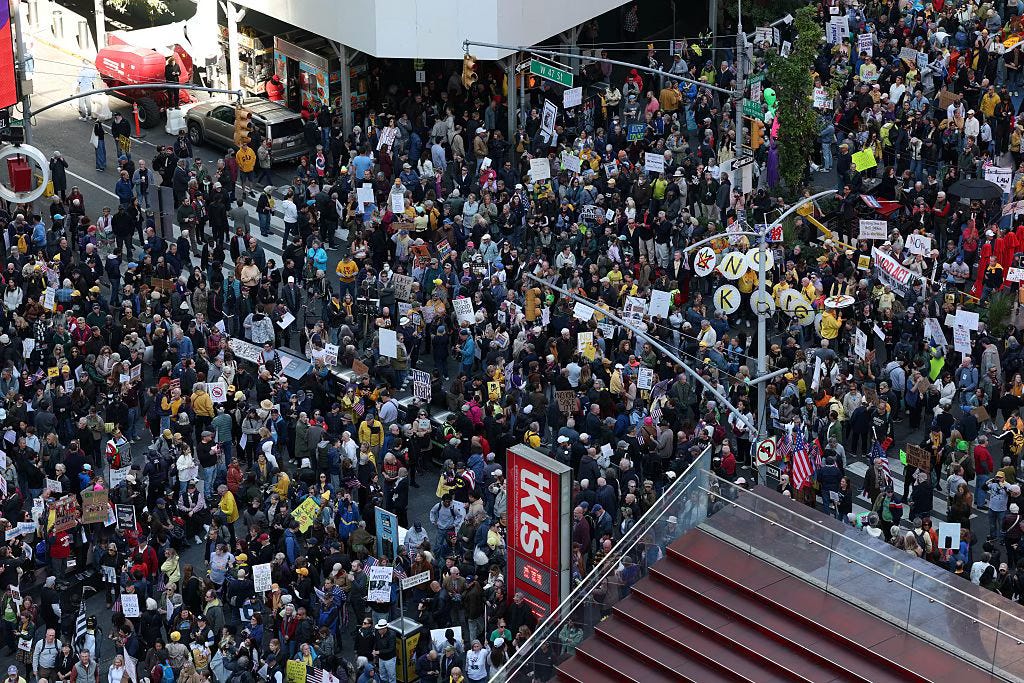
Donald J. Trump aka Metamucilini is forcing taxpayers to pay for things they despise: masked goons terrorizing our cities, a gold ballroom fit for a Mafioso, and the stupidest war in American history.
We’re about to mark the 250th anniversary of an uprising that was sparked by, among other things, taxation without representation. So it’s worth asking: could we be on the brink of a tax revolt? And what would it achieve?
These questions aren’t the kooky musings of a fife-blowing Battle of Bunker Hill reenactor. There was, in fact, a major tax revolt in the not-so-distant past—and it succeeded in bringing down a government.
In 1987, Margaret Thatcher led the UK’s Conservative Party to a massive landslide, becoming the first prime minister since 1820 to win three straight general elections. Her campaign slogan had a triumphalist, Trumpian ring to it: “It’s Great to be Great Again.”
She appeared unstoppable—but, throbbing with hubris, she was about to commit an act of fatal overreach.
Thatcher implemented the “Community Charge,” a poll tax that levied the same amount on every UK citizen regardless of wealth. Taxpayers across the country saw the tax for what it was—Thatcher’s latest attack on those at the bottom of the economic ladder.
The ensuing revolt reached critical mass on March 31, 1990, when 200,000 anti-tax protesters filled London’s Trafalgar Square.
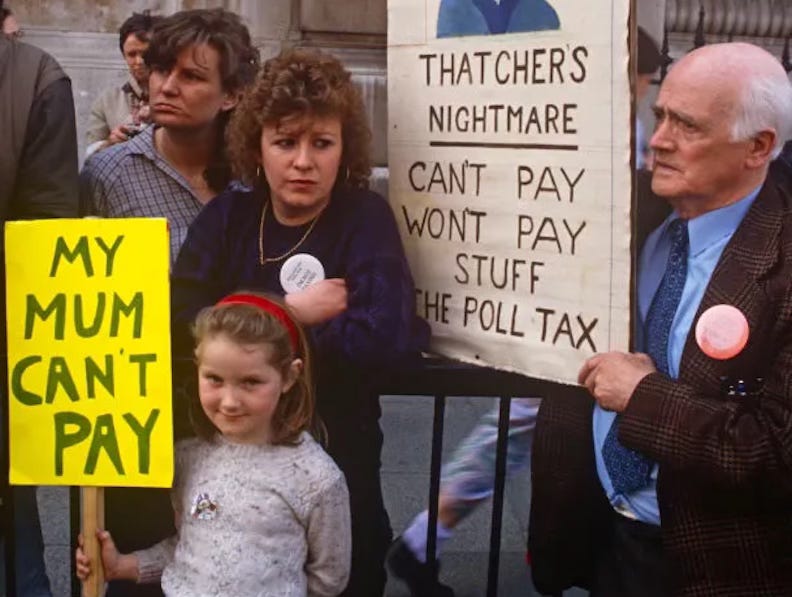
Ultimately, 18 million Britons refused to pay Thatcher’s tax, and local authorities couldn’t enforce its collection. South Yorkshire authorities, for example, called the arrest of tax resisters “physically impossible for the police because of the large number of defaulters.”
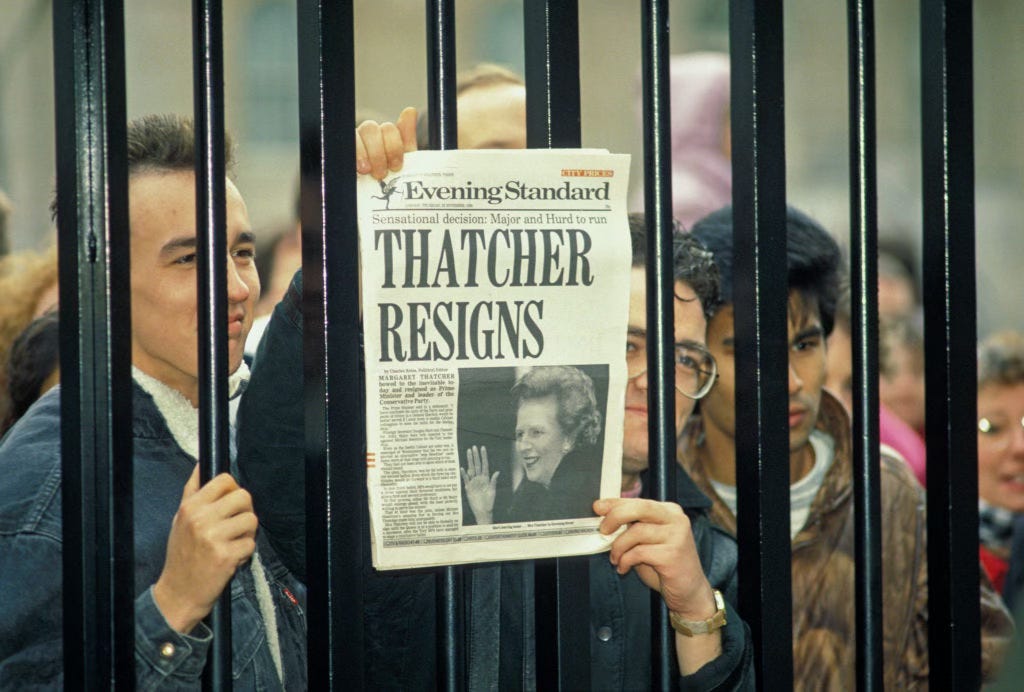
On November 22, 1990, Thatcher resigned, her voice breaking as she left 10 Downing Street. Her political career was over.
Could Trump’s reprehensible mishandling of American taxpayers’ money result in a similar downfall for MAGA?
As the Trump regime shreds the social safety net while enacting trillions of dollars in tax cuts for the wealthiest, anger has boiled over across the country.
And with the midterms approaching, Republicans may be about to learn an unpleasant lesson: you can ban the teaching of history, but that won’t keep it from repeating.

I say throw tea in the reflection pond dressed as business men.
If King George III had proposed a gold ballroom, even the tea would have gone back into the harbor. Meanwhile, somewhere in a warehouse, thousands of powdered wigs are whispering, "We specifically warned you about this."